
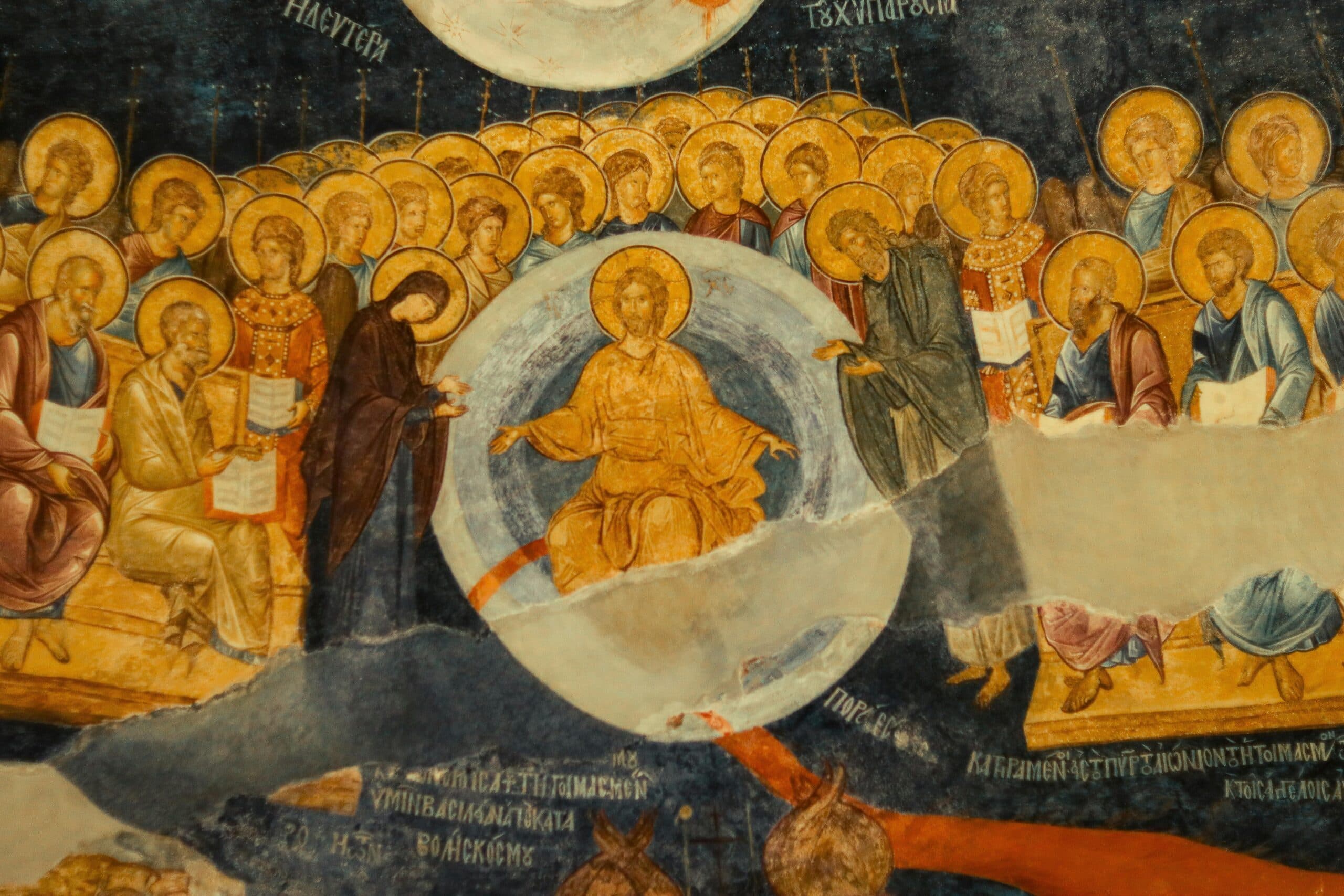
Orthodoxy understands itself as the original and authentic form of Christianity founded by our Lord Jesus Christ and preserved in the life of the Church from the apostolic age to the present day. In this sense, Orthodox Christianity is not a later reinterpretation of the Gospel, but the continuous life of the Church in her faith, worship, doctrine, and spiritual experience.
The terms “Orthodox” and “Orthodoxy” come from the Greek word orthodoxia, which means both “right teaching” and “right glorification.” These meanings belong together. Orthodoxy is not only the preservation of true doctrine, but also the true worship of God, the true life of prayer, and the true path of salvation in Christ.

Already in the writings of Christian authors of the second and third centuries, the word “Orthodox” was used to describe those who preserved the true faith of the Church. The term appears officially in the acts of the Council of Chalcedon in 451, and from the time of Emperor Justinian it entered broad theological and legal use as a way of distinguishing the faith of the Church from heresy and false teaching.
Orthodoxy includes three inseparable dimensions. First, it has a doctrinal meaning: Orthodoxy is the fullness of the Christian faith, preserved in the dogmas of the Church without distortion. Second, it has an ecclesial meaning: Orthodoxy is the communion of the local Orthodox Churches united in the same faith and in Eucharistic fellowship. Third, it has a spiritual meaning: Orthodoxy is the living experience of communion with God through divine grace, by which the human person is healed, sanctified, and transformed.